
The Pendula Preschool/Kindergarten Project in Budapest, Hungary

Share this story:


Submitted by:
Laura Bavalics, Educational Director
Pendula Preschool/Kindergarten
Email | Facebook
Our school, Pendula Preschool and Kindergarten, was founded by Világszép Foundation in 2018 in Budapest, Hungary. While the Világszép nonprofit organization is dedicated to the help and support of children in state-operated foster group homes, one of the Foundation's goals was to create a school where all children, including children living in these group homes, could benefit from inclusive education.
While we were working on creating a private school, we wanted to make sure that it wasn't going to be a "privileged island.” We worked hard to be sure that our school would be open to all children and connected to other preschools, early elementary schools, universities and colleges of education, educational and social services, family organizations and so on. Our financial director created a nonprofit model in which the tuition paid by many of the families goes for not only operating the school, but also supporting several students from the foster care system to attend our school. In each of our classes of 18 children, we have three or four children who are living in foster group homes, many of whom also have disabilities or other challenges. The program was developed to meet all the state requirements to open a school that can educate children with special needs.
How our program is developing
The school development project ran in several threads at the same time. Our team of leaders already had lots of experience in education, in project management, and in finance. This allowed each of us to work within our own field of expertise, which gave us strength. Working in such a multi-disciplinary team also gave us security during the complex multi-task process of planning and developing an inclusive school.
The first core group of educators attended together several workshops designed to help create our school’s mission statement and basic inclusive values. These values – open, together, self-respect, love, empathy, play – formed the foundation for creating our educational program. These basic values continue to shape our identities as educators and our everyday actions in our school.
It was a great learning experience to do holistic research not only on inclusive education itself, but also to examining what is needed in the larger educational system. In my research I interviewed teachers, school principals, special education teachers, social workers, parents, foster parents, advisors, counsellors, and children. I asked what, if they could dream big, would an inclusive school look like, and also what is missing and what is needed in the current system from their point of view. Besides existing academic research and our own experiences in our professions, this research data helped us form the important base for creating the school’s environment and educational program.
For me, as educational director, it was very important to find and bring together a dedicated team of professionals to staff the school. That included not only the early childhood educators, kindergarten teachers and staff, but also a special educational team committed to work with groups of students in the classrooms, and also one-on-one with the children as needed, in the day-to-day educational process. Through our school practicum and internship program several early childhood teachers-in-training wrote their dissertations about our school program, and a number of these university students have come back to our school as teachers after they graduated.
Results of the project
The children feel welcomed in the class.
Each morning the parents and children can find an open classroom door. There is no specific time when they have to arrive. I always say, you can not be late from preschool/kindergarten, you are always welcomed, but if you would like to have breakfast with us, you have to get in before 9 am. It’s a little easier on the young families, that they don’t have to rush in the morning, especially if someone likes to have a longer family breakfast at home or just simply harder to get going in the morning because of some kind of special needs or rituals in the morning.
As students with their parents arrive in the morning, the teacher always welcomes each family at the classroom door, first greeting the parents, asking something about how their night was, and how they are this morning. Then the teacher comes down to the child’s eye level and asks how she/he is this morning, or comments on the toy they brought, etc. or says something inviting, something that makes the transition between home and the classroom easier.
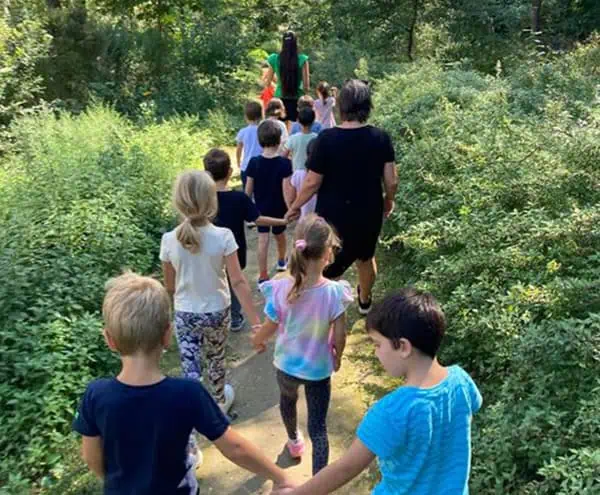
The children from state-operated foster group homes always arrive in a bus accompanied by one of our teacher assistants. Their arrival could be sometimes stormy because we don’t know how their night or morning was in the foster home. The assistants have already been helping them in the transition of the bus ride by telling the children stories, singing nursery rhymes, or taking picture books with them for the ride, or just staying quiet with them and sitting with the feelings may come. As they get close to the school, the assistant gives a call to the school to say that they are getting near. The other assistants or/and teachers and staff, and even parents of other students go out to the parking lot to welcome the children off the bus and walk hand-in-hand with them into the school, into their classes. Through this experience they can feel welcomed, they can sense that they belong.
The children’s thoughts and ideas matter.
When we start new projects in class, often the teacher provides a letter of invitation to complete a task, such as create a story book, work on a specific art project and so on. We sit down in a circle, we open the letter, read it together, making sense of it together. Then the teachers facilitate brainstorming among the children about how everyone could complete the task as a class.
During this process, the teachers create an open, welcoming atmosphere and, through that, the children can feel that their ideas are welcomed. Some children with special needs sometimes find it hard to contribute, but the teachers pay attention to ask open and supportive questions of all the children about how their classmates could take part in the project, what could be their specific role, for example. The ideas go up on a blackboard. Even though most of the children can’t read yet, the teacher writes down the key words in a mind map and, together with the children, they come up with a pictogram for the specific idea or task.
The ideas of the children give the spine for the monthly project, and teachers shape their lesson plans by them. Week by week, they check on the black board for how far they got and what is next. When the whole project is complete, there is an event including all the three classes when the children can show each other what they worked on in the past month.
The children take responsibility for their own classroom, their educational space and their learning.
Let me tell you a story as an example of how this became obvious to me.
We have in the classroom a nest swing that the children can use anytime they want to. At the beginning of the year, they have been kind of rough with it, as they would with an outside swing. They stood up in it and so on.
Of course when it was becoming dangerous, we would let them know their safety comes first. But very early on, we had circle time with the children to talk about how we could use this swing safely. What would be the five most important rules? There was a brainstorming facilitated by me, we went back and forth, we collected the five rules. I wrote it down and the children drew pictograms beside them and we put it out on the wall close to the swing. We agreed that it’s everyone’s responsibility to make sure the children use the swings by these rules. After this activity, the teachers never had to discipline the children for misusing the swing, and the children seemed to enjoy reminding each other how to use the swing, and how to “behave”. After a few days they learned to use the swing safely. The children are included in creating the rules of their own classroom.
The children are included in each other’s learning processes.
By creating a warm, welcoming, supportive environment in the class, the children can feel that they all have special skills to offer to one another. And they all can offer special attention to one another that can support their classmates learning process.
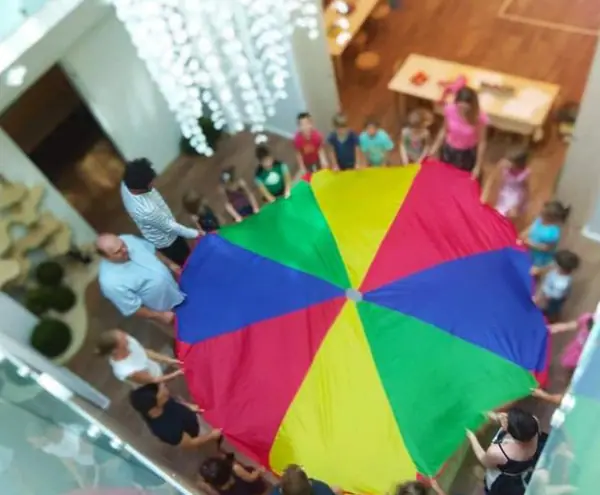
In Hungary we have lots of nursery rhymes and a lot of children’s folk songs that are accompanied with movements. As you can imagine, this land of Kodaly, Bartok, Liszt has a rich musical culture. There are a number of them that we sing each day with the children playing the movement games with them – going in a circle, picking pairs, clapping their hands. It is always lovely to watch the children making sure they are holding each other’s hand, and when the clapping part comes, there is always a child who helps a child with special needs to make sure she is able to bring her hands together to clap for the rhythm of the song. Or they help her to walk over to someone to find a pair. They saw a number of times how we teachers supported the children with special needs, and it seems that it started to feel natural that it’s something they can do too.
I think the best way to describe what our school does for children is through two stories told by one of our students in foster care:
Story from the beginning of the school year, after being placed in foster care:
“Once upon a time, there was a family. Which was over the course of a school year a cobra family. That family consisted of twenty cobras. They went for a walk. One of the cobras turned back because he was always afraid on the street. A black bus came there. In which the kidnapper… Snake robber sat, who was a man. He put her in the bus and took her to the children’s prison… to the animal prison. There were a lot of animals there. One of the animals was a saber-toothed tiger, because only wild animals lived there. The End.”
Story from the end of the school year at Pendula:
“It’s a magic walnut. If you are in a bad mood, you should say, ‘Pendula!’ And after that it will be all good.”
The parents and families become our partners in the educational process and benefit themselves from the process.
In the everyday life at our school, we see diverse friendships developing – among families, and their children with typical development, children with special needs and children from foster homes. Through our school program, the parents are able to open up to each other and reach out to each other. A parent of a child with disabilities is able to have discussions about what it means in daily life to have a child with a specific syndrome. A parent with a child with typical development can share their feelings about how they did not know how to talk to that parent because of fear or concern of creating an uncomfortable situation.
All of the parents in our school become educated about the foster care system. They not only learn about what the system looks like and the definition of traumatic childhood experiences, but they also come to know children who have had these challenges, through the school experiences of their children and through the Open Door approach of our school. The parents and children are met with the reality of it and are learning together in a safe and supportive school environment. There are few words for what an amazing learning experience this is about care, empathy, and love.
What we have learned
I think for me the most important message for those trying to develop inclusive schools is that inclusive education is a never-ending effort searching for the best ways to support all children and adults in the educational process. By keeping our doors open to all students and families, we may be more vulnerable, but we are also true to ourselves and our responsibilities, and there is strength in that.
Do you have an Inclusion in Action Story to share? We’d love to read about it and share it with others.